
Our JP gives his take on the documentary, “The AI Doc: Or How I Became an Apocaloptimist,” directed by Daniel Roher and Charlie Tyrell.
The AI Doc: Or How I Became an Apocaloptimist
Focus Features
- Directed by Daniel Roher, Charlie Tyrell
- Produced by Daniel Kwan, Jonathan Wang, Shane Boris, Diane Becker, Ted Tremper
- Starring Daniel Roher
Synopsis
From the Academy Award®-winning filmmakers behind Everything Everywhere All at Once and Navalny; a father-to-be tries to figure out what is happening with all this AI insanity. The AI Doc: Or How I Became an Apocaloptimist is a hand-made, eye-opening documentary about the most powerful technology humanity has ever created… and what’s at stake if we get it wrong.
J.P.’s Take:
As someone who is part of the digital generation, I saw the implementation of home computers, the advent of the internet (after dial-up), cell phones becoming the new fangled portable device, and many other inventions that were coming into view during the ‘80s/’90s. As a kid, I was heavily into science fiction, and I still am to this day, believing that many of the things I’ve read about would soon become part of everyday life. People were cautious about the new technological advancements even back then, feeling overwhelmed and as if they were out of their depth.
At that time, even at a young age, I totally understood their apprehension, especially with movies like “The Terminator,” “Robocop,” and “Blade Runner,” which were a sign of things to come. The idea of sentient technology is both fascinating and frightening, creating an overwhelming sense of unease that often makes the innovations seem intimidating or even threatening. To think these machines may someday outsmart us, which would make them our overlords. That sentiment hasn’t changed to this day, as we’ve entered the next evolutionary stage in the tech world …. A.I. (artificial intelligence).
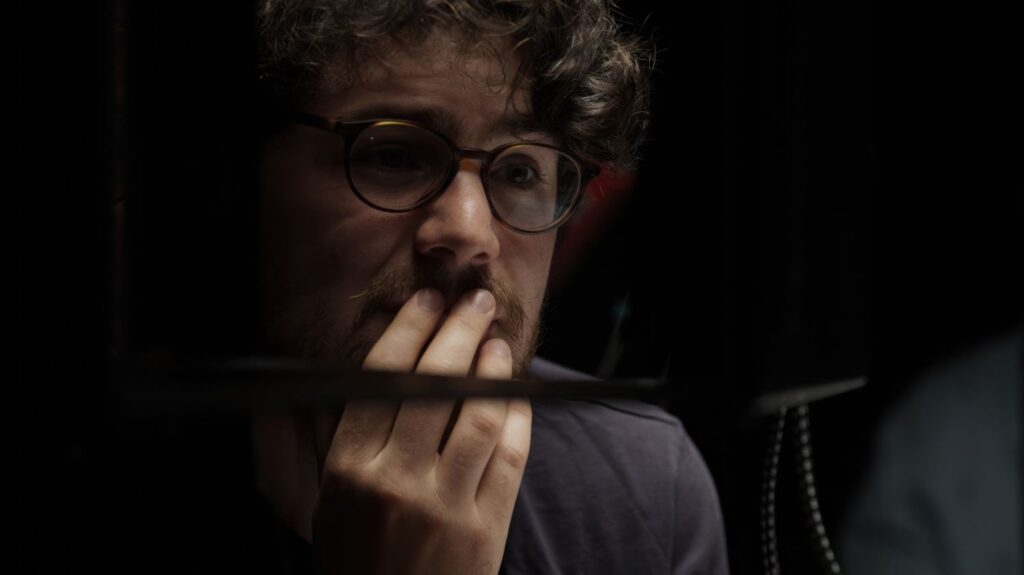
“The A.I. Doc: Or How I Became an Apocaloptimist” is writer / director Daniel Roher’s exploration of this new age, as he and his wife become parents for the first time. Although this documentary carries a message about the frightening prospects of A.I.’s overreach, it also offers a balanced view by exploring both the benefits and the drawbacks, while giving it a human touch in the process.
Credit: Courtesy of Focus Features. © 2025 All Rights Reserved.
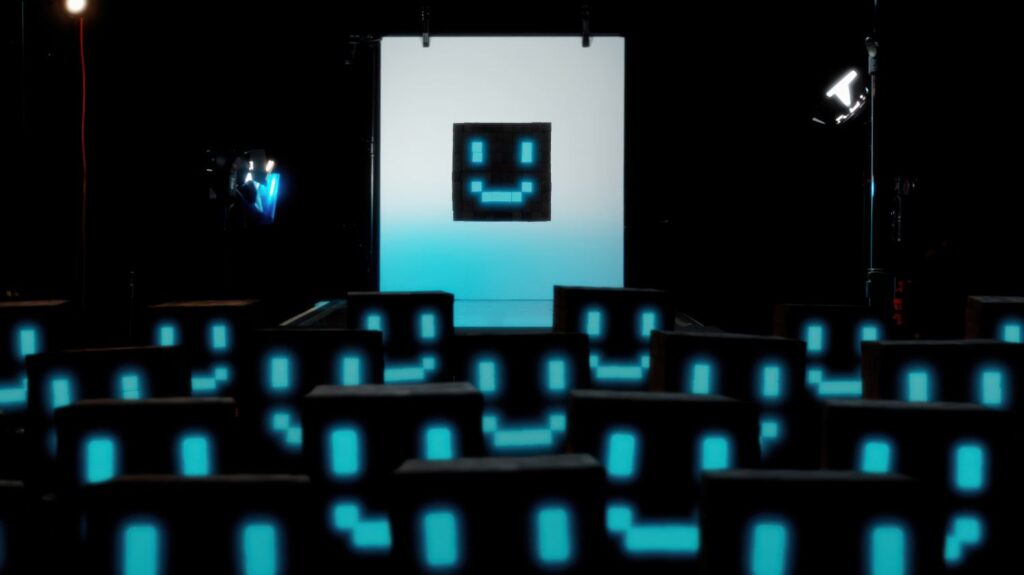
If you break it down into two chapters, just the “The A.I. Doc….” side of it, you’ll find that the first half is where we walk on the dark side of A.I. What Roher was attempting to do first is find what A.I. is and what it does. In the many interview sessions with several engineers, scientists, and professors in the field, he discovers that all the mumbo jumbo and tech jargon he received made A.I. sound even more creepy and foreboding. Each time, diving deeper into the realm of the minds of these engineers, who in many ways seem as though they’re creating LIFE. Within the documentary itself, he even expresses how dim and dreadful he’s starting to feel about our future, because our future hangs in the balance against a possible digital holocaust.
Yet he finds a treasured trove of knowledge from these brainy techies and decides to keep going despite his despair. In the second half, which I’ll dub as chapter two, “How I Became an Apocaloptimist…,” Roher sits down with some well-known Tech Heads in the biz as well, inviting Sam Altman, CEO of OpenAI, who also led the team that created ChatGPT; Dario Amodei, and Daniela Amodei, CEOs of Anthropic; Demis Hassabis, CEO/co-founder of Google DeepMind; and Connor Leahy, CEO/founder of Conjecture; Rocky Yu, CEO/founder AGI House; and Jason Matheny, President and CEO of RAND. Additionally, Roher also consults with Tristan Harris and and Aza Raskin, co-founders/CEOs of the Center for Humane Technology; Dr. Timnit Gebru, founder and ED of DAIR (Distributed A.I. Research) institute, and Deborah Raji, UC Berkeley researcher.
What’s surprising about this half of the documentary is that Daniel is starting to see the light at the end of the tunnel, as these figures give us a much more optimistic and “bright-side” of how A.I. can help positively shape society, all while expressing the fact that we’re in charge of our future and the technology we produce. Leading to the more humanistic aspect of how we can and will live side-by-side with even the most advanced technologies, as humans have adapted ages before these inventions.
Yet there is always the moral of the story, where, when you add up both sides of the story, you receive an ample brainful of information to chew on. Humans faced significant challenges throughout history, emerging stronger and more knowledgeable each time. We remain resilient in our ability to shape our own future rather than allowing technology to dictate it for us. Therefore, we still have the power to make choices that influence the direction of our lives, emphasizing the importance of our agency in a world increasingly taken over by machines. The question remains, are we strong enough and willing to make the right decisions?
Credit: Courtesy of Focus Features. © 2025 All Rights Reserved.
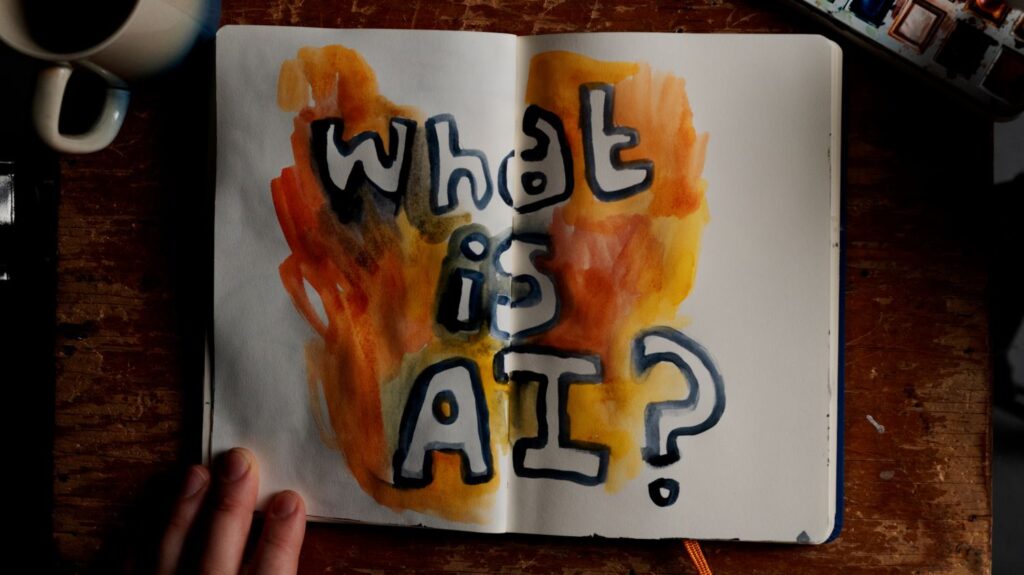
He illustrates all these points in the most creative ways, showcasing his artistic skills with hand-drawn animated inserts, news footage, and other video clips cleverly stitched together in a seamless visual tapestry. There is a symbolic message here in the sense that Daniel and his wife, Lindy, who narrates part of the film, as they become parents, so do tech companies in producing sentient machines.
There is much to absorb here once it all comes to a close, and for that, this is the type of documentary that gives you a bit of food for thought, while adding a bit of levity to the situation. I recommend “The AI Doc: Or How I Became an Apocaloptimist” for those of you deep thinkers on the new digital world we live in … especially those with children.
- Official Site: The AI Doc: Or How I Became an Apocaloptimist
- Official Site: Focus Features